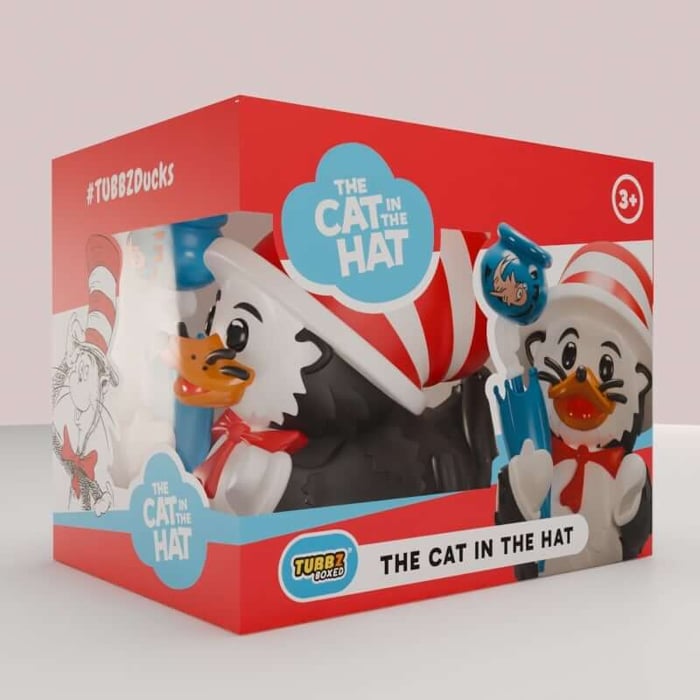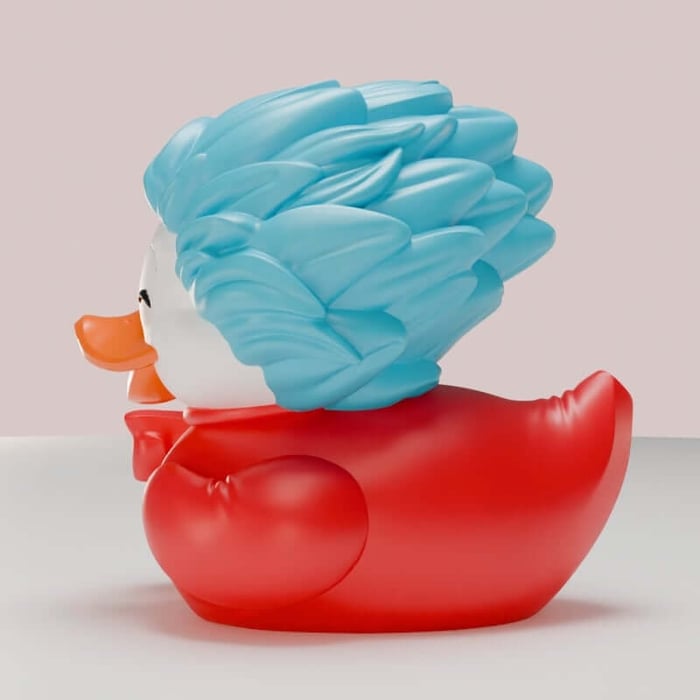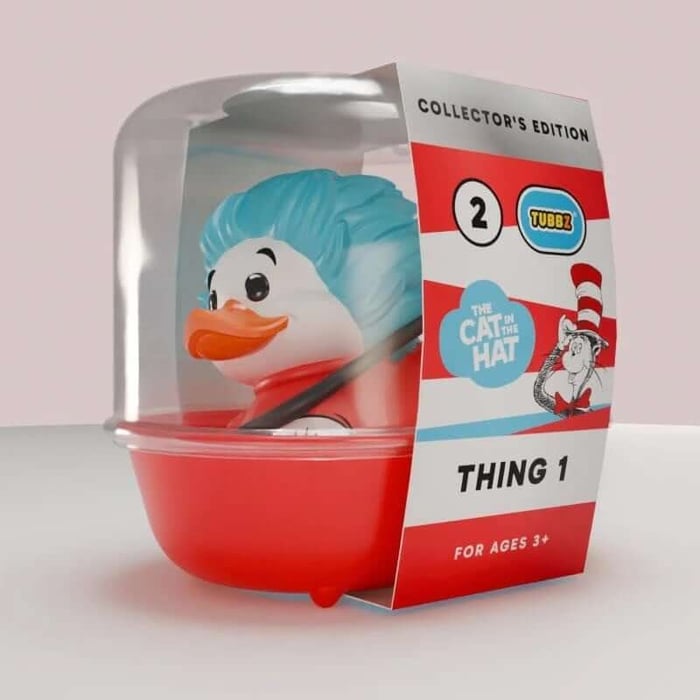






If you had to choose right now, would you pick Thing 1 or Thing 2? Most people answer instantly. Yet here is the twist. There may be no real difference at all. At first glance, they are identical. Same wild blue hair. Same bright red outfits. Same mischievous grin. The only visible change is the number on their chest. Still, the debate around Thing 1 vs Thing 2 has lasted for decades. Fans compare them. Collectors choose favourites. Costume wearers argue over who gets which label.
That curiosity is not accidental. It reveals something deeper about how your brain works. When two characters look the same, you instinctively search for distinction. You assign personality. You project traits. You create identity where none officially exists. And when it comes to toys and figures, that psychological pull often leads you to want both rather than one.
So what is really going on here? Let’s explore the origins of these iconic characters, unpack the actual difference between Thing 1 and Thing 2, and understand why their deliberate similarity plays such a powerful role in storytelling, branding, and collectibles.
Key Takeaways
There is no canonical difference between Thing 1 and Thing 2; their duplication is intentional.
Their identical design strengthens storytelling and increases collectible appeal.
Owning both figures creates stronger visual symmetry and narrative completeness.
The Origins of Thing 1 and Thing 2
To understand the Thing 1 vs Thing 2 debate, you need to return to The Cat in the Hat by Dr. Seuss. The book was designed to make reading fun, rhythmic, and accessible. Simplicity was the goal.
Thing One and Thing Two were introduced as controlled chaos. They enter the story midway and escalate the disorder created by the Cat. Their role was not to be deeply developed individuals. Their purpose was amplification. Keep reading to take a closer look at each in detail.
Thing 1
Thing 1 explodes onto the page with instant energy. Wild blue hair shoots upward like a warning sign. The bright red jumpsuit is loud on purpose, and the bold circular badge stamped with “1” makes him instantly recognisable. He barely needs dialogue because his body language does all the work. You can almost hear the chaos before it happens.
In the story, Thing 1 represents pure momentum. He acts first and thinks later. He turns the Cat’s playful disruption into a bigger mess, faster, and with less restraint. He is the character version of a room getting out of hand in seconds.
Here is where it gets interesting. Fans often treat him like the “leader” just because he is labelled first. But the book does not actually give him extra authority or a unique role. Those traits you might assign to Thing 1 are mostly coming from your own interpretation. And that matters, because it explains why the Thing 1 vs Thing 2 debate still lives on today.
The Cat in the Hat: Thing 1 TUBBZ (Collector's Edition)

$24.99
Thing 1 brings playful chaos to the TUBBZ lineup. From the bright blue hair to the bold red outfit, this Collector’s Edition perfectly captures the energy and personality of one of Dr. Seuss’s most recognisable troublemakers, complete with a red… read more
Thing 2
Thing 2 mirrors Thing 1 almost perfectly. The same untamed blue hair. The same bright red jumpsuit. The same fearless grin. If you swapped their number badges, most readers would not notice. The only visible distinction is the “2” printed across his chest.
That duplication was not lazy design. It was deliberate. For early readers, simple repetition improves recognition and fluency. When children can instantly identify characters without processing new visual details, the reading experience feels smoother. The mirrored design also strengthens the rhythm in the illustrations. Two identical figures bouncing across the page create movement, speed, and controlled chaos.
From the very beginning, Thing 2 was never meant to compete with Thing 1. They were designed to operate as a unit. A matched pair. A doubled dose of disruption. And that pairing is exactly what makes the Thing 1 vs Thing 2 conversation so interesting today.
The Cat in the Hat: Thing 2 TUBBZ (Collector's Edition)

$24.99
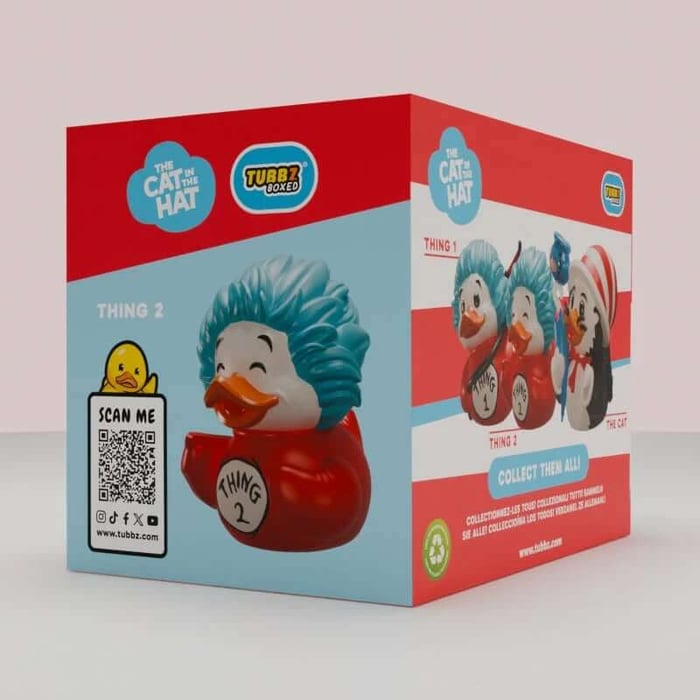
Thing 2 joins the fun as a detailed Collector’s Edition TUBBZ. With their bright red outfit, wild blue hair, and a playful expression, this collectible captures the unmistakable look fans know and love and pairs perfectly with Thing 1 for a truly… read more
Are They Actually Different?
Now let’s address the question head-on. Are Thing 1 and Thing 2 different in any official capacity, or is the debate purely fan-driven?
Visual Comparison
If you strip away interpretation and focus only on design, the Thing 1 vs Thing 2 comparison is remarkably simple:
Feature | Thing 1 | Thing 2 |
Hair | Blue | Blue |
Outfit | Red jumpsuit | Red jumpsuit |
Behaviour | Mischievous | Mischievous |
Label | 1 | 2 |
Visually, the only confirmed difference is the number on their chest. That is the full extent of it.
The Cat in the Hat Thing 1 TUBBZ (Mini Edition)

$9.99
The Cat in the Hat Thing 1 TUBBZ Mini Collectible Duck Thing 1 Mini TUBBZ brings playful chaos in pint-sized form. Featuring his bright red outfit, wild blue hair, and energetic expression, this mini collectible captures the bold, recognisable look… read more
This simplicity is intentional. Young readers can instantly identify both characters without confusion. The illustrations remain clean and easy to follow. Most importantly, duplication creates visual rhythm. Two identical figures moving together amplify energy without adding complexity.
When translated into toys and figures, that symmetry becomes even more striking. Two matching characters displayed side by side create balance, structure, and a stronger visual impact. In collecting terms, duplication does not weaken appeal. It strengthens it.
The Cat in the Hat Thing 2 TUBBZ (Mini Edition)

$9.99
The Cat in the Hat Thing 2 TUBBZ Mini Collectible Duck Thing 2 Mini TUBBZ arrives in compact form, packed with personality and playful detail. With his bright red outfit, wild blue hair, and cheerful expression, this mini collectible brings a classic… read more
Personality Differences
Officially, there is no written distinction in Thing 1 vs Thing 2 personality. In the original story, they act as a unit. They speak similarly. They behave similarly. They cause chaos together. Yet fans often insist on differences. Some argue Thing 1 feels slightly more daring. Others suggest Thing 2 appears more responsive or reactive. These interpretations are not supported by the source material. They come from projection.
And that projection is important. It shows how strongly audiences connect with characters, even when those characters are intentionally interchangeable. The absence of difference invites imagination. It invites debate. It turns two matching figures into an ongoing conversation.
In that sense, their similarity is not a limitation. It is the very reason the discussion still exists.
Why Their Similarity Matters in Storytelling
At this point, you might ask why duplication was necessary at all. Why not give each character a distinct personality, outfit, or role? The answer lies in narrative design. By introducing two identical forces of chaos, the story achieves escalation without adding confusion. The room becomes messier. The pace becomes faster. Yet the reader never struggles to keep up. Their similarity allows the book to deliver escalation without complexity, increased movement across each illustrated spread, and a stronger sense of playful disorder.
For early readers, clarity is everything. Simple, repeatable designs reduce cognitive load. If Thing 1 and Thing 2 had separate wardrobes, contrasting personalities, and different speech patterns, the flow could become cluttered. The rhythm would weaken. Repetition is a powerful tool in children’s literature. It strengthens engagement and improves retention. Thing 1 and Thing 2 act as visual repetition devices. They double the chaos while keeping the structure stable.
This is not lazy writing. It is strategic simplicity. And that strategy is exactly why the characters remain so memorable.
Thing 1 vs Thing 2 in Collectibles
Now let’s shift from storytelling to ownership. Because in the world of toys, figures, and licensed merchandise, duplication does not dilute value. It often multiplies it.
Thing 1 in Collectible Form
In figure form, Thing 1 delivers immediate impact. The bright red outfit contrasts sharply with the electric blue hair. The bold “1” badge creates a clear identity. Even as a standalone piece, he feels dynamic and expressive.
Placed on a shelf, he acts as a focal point. The colour palette draws attention without overwhelming surrounding items. For collectors who prefer minimalism, one figure can function as a playful accent within a broader display.
The Cat in the Hat: Thing 1 TUBBZ (Boxed Edition)

$19.99
Thing 1 arrives as a boxed TUBBZ collectible, bursting with personality and playful detail. Featuring his bright red outfit, wild blue hair, energetic expression, and red-and-white kite, this edition is presented in a window display box and is ideal for… read more
Thing 2 in Collectible Form
Thing 2 mirrors that same sculpt and colour story. The design language is identical. Yet when displayed alone, something often feels incomplete. The original narrative logic suggests pairing, and that instinct carries into collecting behaviour. This is where psychology enters the equation. Owning both figures naturally creates visual symmetry, enhances perceived value, and completes the narrative scene.
In ranges such as Thing 1 and Thing 2 TUBBZ, the pairing effect becomes even stronger. The duck form slightly exaggerates their proportions while preserving the recognisable hair, outfit, and badge. Side by side, they feel intentional rather than repetitive.
For collectors browsing Thing One and Thing Two merchandise, purchasing a single figure can feel transitional. Purchasing both feels resolved. It feels finished. And that subtle shift in perception is exactly why duplication works so effectively in toys and figures.
The Cat in the Hat: Thing 2 TUBBZ (Boxed Edition)

$19.99
Thing 2 arrives in boxed TUBBZ form, bringing bold colour and classic Dr. Seuss character to the collection. With his bright red outfit, wild blue hair, and playful expression, this display-ready collectible pairs naturally with other Cat in the Hat favourites. Key… read more
Does the Difference Actually Matter?
Narratively, no. There is no official hierarchy between them. No confirmed personality split. No hidden backstory that separates one from the other. On the page, they function as a single unit of chaos. Culturally and commercially, however, the answer changes.
Their duplication encourages playful rivalry among fans. People instinctively “choose” a side, even when there is no real difference. That harmless debate keeps the characters relevant. It sparks conversation online and offline.
It also fuels costume culture. Thing 1 and Thing 2 costume ideas remain popular for parties, school events, and themed gatherings because the pairing format invites participation. You do not attend alone. You attend as a duo. That shared identity strengthens the social appeal.
From a collecting perspective, duplication increases opportunity. Two nearly identical figures often lead to:
Stronger pairing purchases.
Higher perceived completeness.
Greater display impact.
Final Thoughts: Two Labels, One Legacy
So what is the real outcome of the Thing 1 vs Thing 2 debate? They are intentionally the same. That is the brilliance. Their duplication enhances storytelling clarity. It strengthens visual design. It amplifies chaos in a controlled way. And in the world of toys and figures, it increases collectible appeal through symmetry and pairing psychology.
If you are building a display or exploring Thing 1 and Thing 2 gift ideas, consider what message you want your shelf to communicate. A single figure suggests individuality. A pair suggests completeness. Two labels. One legacy.